

Big Tobacco Targeted Marketing Strategies
Big Tobacco companies understand the importance of effective marketing strategies to generate revenue and new customers for their products. In any given year, Big Tobacco spends approximately $8.6 billion every single year on their marketing and advertising for their products. This equates to about $23 million every single day. These advertisements reach young audiences and target marginalized populations, such as the LGBTQ+ community and communities of color. ¹
Point-of-sale marketing is shown to be more prevalent in communities with areas that are made up of lower-income residents and higher populations of marginalized populations. These marketing strategies are especially effective with youth populations, as studies show that youth who are exposed to point-of-sale tobacco marketing are 1.6x more likely to have tried smoking, and 1.3x more susceptible to pick-up smoking behaviors in the future. Big Tobacco is actively harming our youth with these predatory marketing practices. ²
Social media plays a major role in Big Tobacco’s quest to appeal to younger audiences. According to the truth initiative, many large tobacco retailers have violated the U.S. Food and Drug Administration’s (FDA) regulations regarding warning labels and using language and visuals that appeal to younger audiences. Social media platforms have few restrictions for posts that advertise tobacco products, and even fewer repercussions to breaking these restrictions. ³
Harmful Environmental Repercussions of Vape Waste
The amount of waste created by Big Tobacco companies is staggering. According to the Truth Initiative, approximately 766,571 metric tons of cigarette butts enter our environment every single year, while there are 5 disposable vapes being thrown away every second in the U.S., or 150 million devices every year. The amount of lithium from these disposable devices equates to 6,000 electric vehicles. ⁵
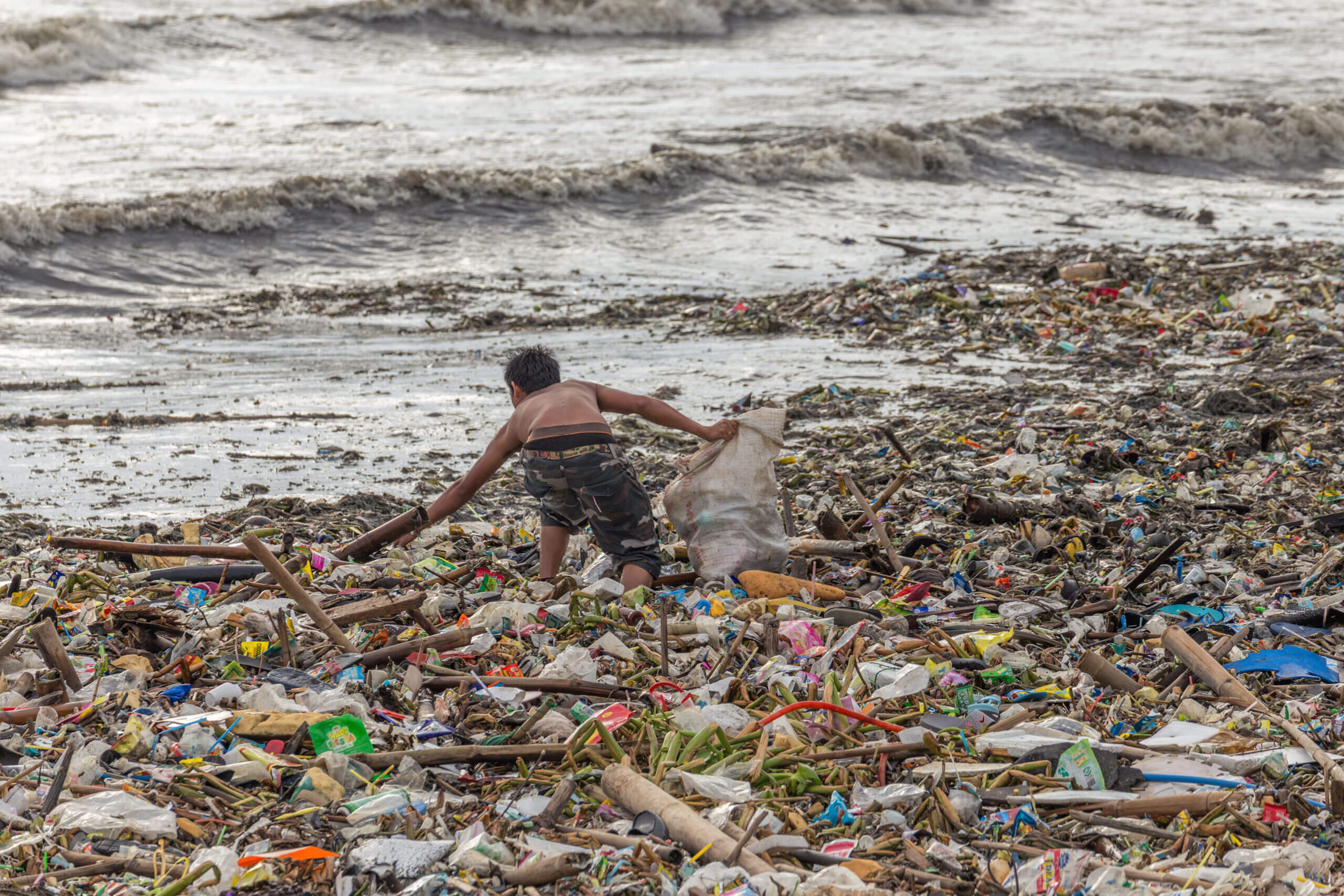
Land degradation is causing a rapid decline in biodiversity and making it difficult for communities that depend on a healthy environment to make their living. (Photo: szefei/Shutterstock.com)
Big Tobacco companies fail to give users proper disposal information for e-cigarettes, which leads to many of these products being thrown in the trash and ending up in landfills all throughout the United States. This poses a significant threat to our environment due to the hazardous chemicals that can be found in these products, such as residual nicotine, heavy metals from the batteries in the disposable vapes, and the plastic casing of these devices that is non-decomposable. ⁴
The United States does not have safe or effective ways to dispose of these e-cigarettes, and the removal of lithium-ion batteries for recycling is a dangerous and difficult task. Waste management and recycling companies do not have the proper facilities to remove and dispose of the toxic chemicals and batteries that are in these disposable products. If removal is done incorrectly or one of these products ends up being crushed by trash compactors, lithium batteries have been known to explode and catch fire, posing serious and life-threatening risks to waste management staff. ⁴
Environmental Effects of Vapes/Cigarette Products
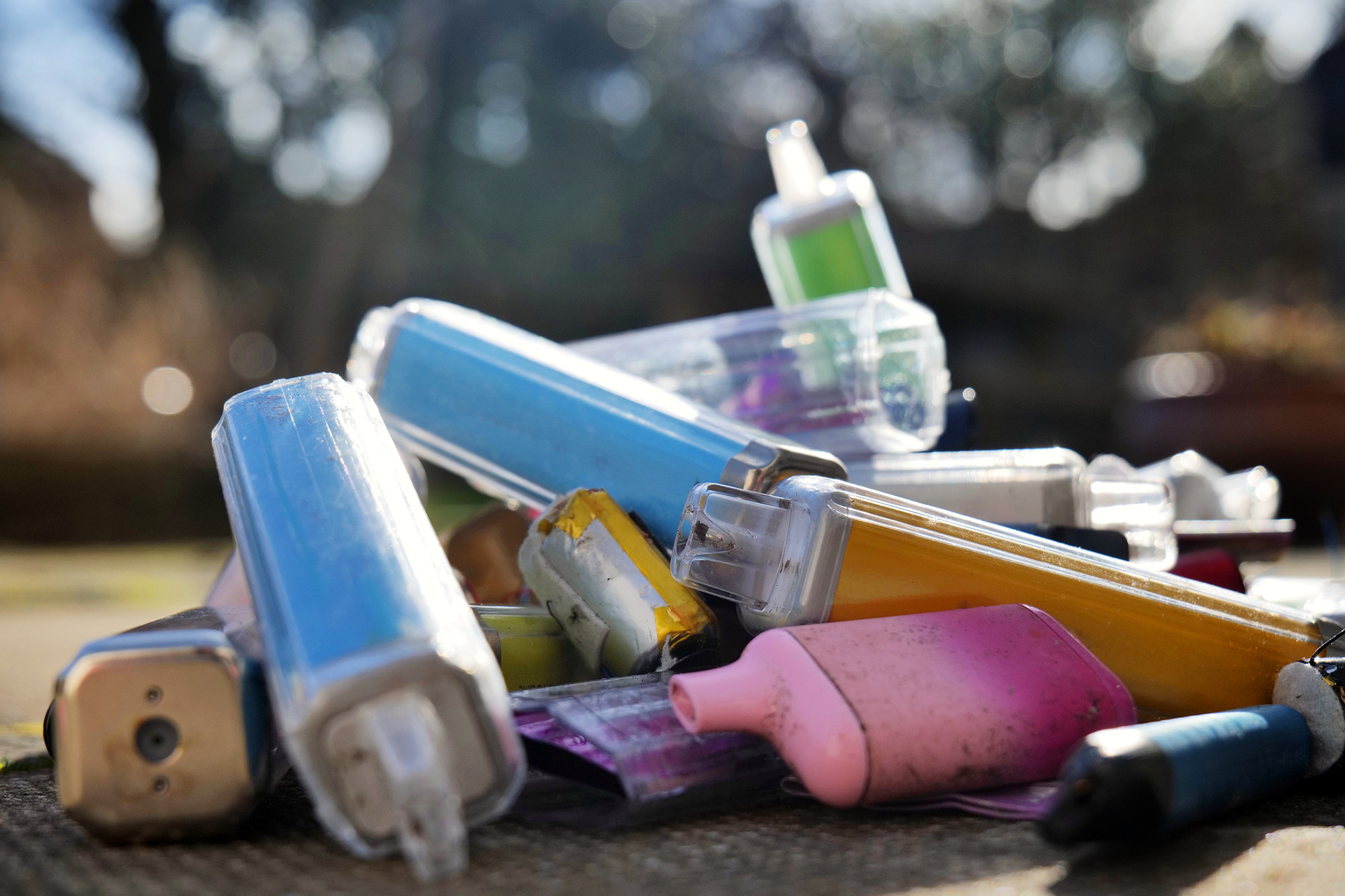
Vaping products, or e-cigarettes, are single-use plastics that contain harmful chemicals that pose a significant threat to the environment when not disposed of properly. E-cigarettes are considered more harmful to the environment than cigarette butts due to the presence of plastics, heavy metals, nicotine salts, and their flammable lithium-ion batteries. E-cigarettes are not biodegradable, even under extreme conditions and the harmful materials in them flow into our waterways and negatively affect our wildlife. ¹
These e-cigarettes are also rarely ever disposed of correctly. According to a survey conducted from February to June of 2020, more than half of respondents (51%) reported just simply throwing their vapes in the trash. There is no information provided by the manufacturers of these products on how to properly dispose of them, which can lead to dangerous outcomes. A punctured battery on a disposable e-cigarette product can lead to chemical fires and the leakage of hazardous chemicals into the environment. ²
There are no recycling programs for disposable vape products in the United States. The normal waste management and recycling companies do not have the necessary facilities to properly, and safely dispose of these products which creates a dangerous environment for its employees and the environment. ²
The improper disposal and storage of these e-cigarettes has led to harmful outcomes for small children. The different flavors can lead to children ingesting nicotine, which even in small quantities can lead to serious and life-threatening results. According to McGrath-Morrow et al., mild acute nicotine intoxication in children can result in nausea and vomiting, respiratory issues, and cardiovascular complications. Higher levels of nicotine intoxication can also lead to seizures and cardiorespiratory arrest. This accidental ingestion of nicotine by children has led to several deaths. ³
In 2023, there was 18,750,000 lbs. of vape waste! That’s approximately the same as:
- 57 blue whales (average weight is 330,000 lbs.)
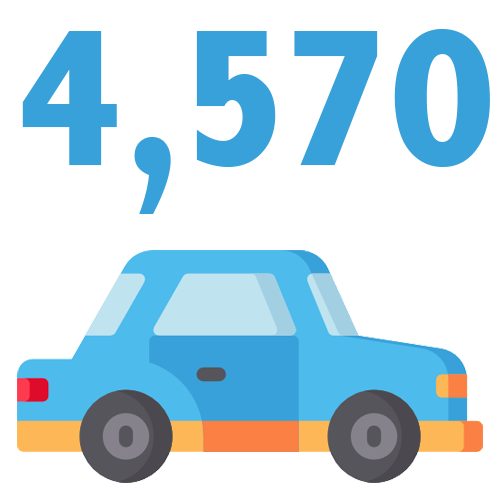
- 4,570 cars (average weight is 4,100 lbs.)
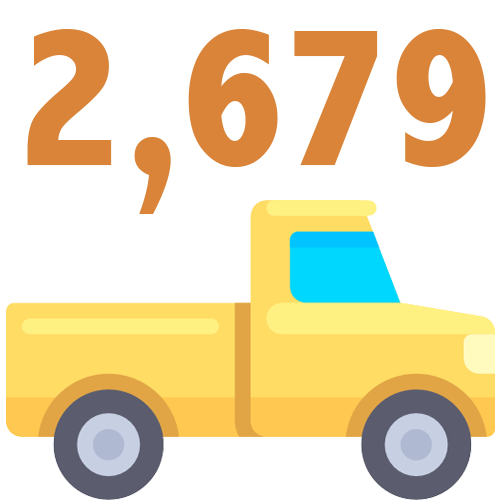
- 2,679 pickup trucks (average weight of a class 3 pickup truck is 7000 lbs.)
- 1,250 school buses (average weight is 15000 lbs.


Mental Health Effects of Vaping/Cigarette Products
Research has shown that using e-cigarette devices and nicotine products has led to increased depression and anxiety in young adults. There is a common misconception that nicotine can help relieve stress and anxiety, when it does the opposite. The combination of nicotine withdrawal symptoms are as much to blame for this as the big tobacco companies’ marketing strategies that they deploy. According to a study done in 2021, 50.1% of young people have reported using nicotine products as a means to cope with stressors of their daily lives and environments. 4
Need help quitting? You’re not alone!
More information is available by calling 1-800-QUIT-NOW or by visiting pa.quitlogix.org.
For access to our toolkits and to learn more about our tobacco cessation efforts, click here.
Sources:
- https://assets.tobaccofreekids.org/factsheets/0008.pdf
- https://truthinitiative.org/research-resources/tobacco-industry-marketing/truth-about-tobacco-industry-and-retail-environment
- https://truthinitiative.org/research-resources/tobacco-industry-marketing/nearly-90-instagram-posts-tobacco-companies-violate
- https://truthinitiative.org/research-resources/harmful-effects-tobacco/most-young-users-put-disposable-e-cigarettes-trash
- https://truthinitiative.org/research-resources/harmful-effects-tobacco/tobacco-and-environment